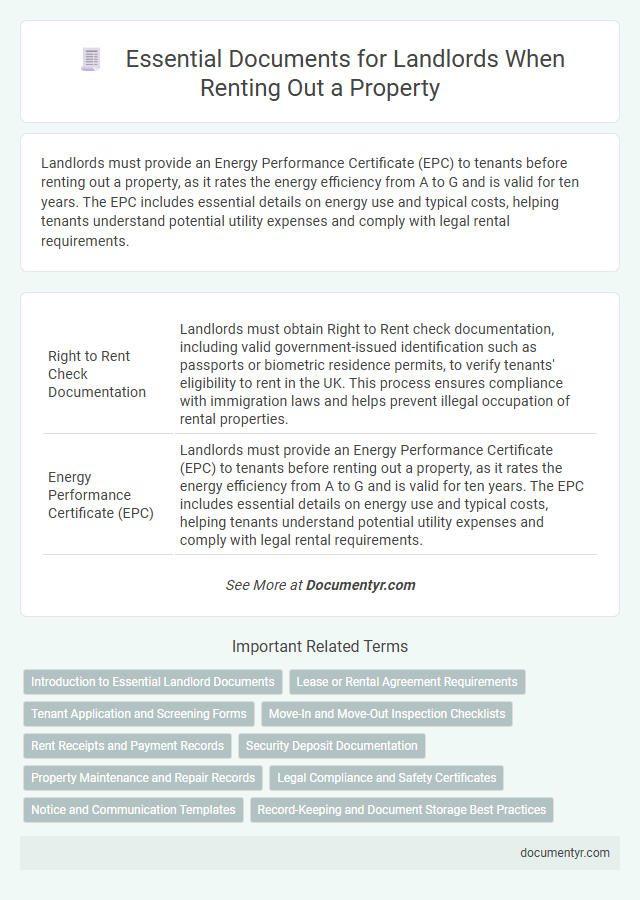
A landlord needs essential documents such as a valid property title deed to prove ownership, a government-issued identification card for verification, and a tenancy agreement outlining the terms and conditions for renting out the property. Additionally, obtaining a no-objection certificate (NOC) from the local municipal authority may be required depending on the jurisdiction. Proof of property tax payments and safety compliance certificates further ensure the property is legally ready for rental.
What Documents Does a Landlord Need to Rent Out a Property?
| Number | Name | Description |
|---|---|---|
| 1 | Right to Rent Check Documentation | Landlords must obtain Right to Rent check documentation, including valid government-issued identification such as passports or biometric residence permits, to verify tenants' eligibility to rent in the UK. This process ensures compliance with immigration laws and helps prevent illegal occupation of rental properties. |
| 2 | Energy Performance Certificate (EPC) | Landlords must provide an Energy Performance Certificate (EPC) to tenants before renting out a property, as it rates the energy efficiency from A to G and is valid for ten years. The EPC includes essential details on energy use and typical costs, helping tenants understand potential utility expenses and comply with legal rental requirements. |
| 3 | Prescribed Information Form | The Prescribed Information Form is a legally required document that landlords must provide to tenants before the tenancy begins, detailing the landlord's contact information, the property address, and the deposit protection scheme used. This form ensures compliance with housing regulations and protects tenant rights by clearly outlining tenancy terms and deposit handling. |
| 4 | Digital Inventory Report | A digital inventory report is an essential document for landlords to accurately record the condition and contents of a rental property, providing evidence to resolve disputes over deposits and damages. This electronic record includes detailed descriptions, photographs, and timestamps, ensuring transparency and protecting both landlord and tenant rights throughout the tenancy. |
| 5 | Tenant Data Privacy Consent Form | A landlord must obtain a Tenant Data Privacy Consent Form to comply with data protection regulations when collecting and processing personal information during the rental application process. This document ensures tenants' privacy rights are respected by outlining how their data will be used, stored, and safeguarded throughout the tenancy. |
| 6 | Government-Approved How to Rent Guide | Landlords must provide the government-approved How to Rent guide to tenants at the start of a tenancy in England, ensuring compliance with legal standards and helping tenants understand their rights and responsibilities. This document is a mandatory part of the tenancy process and supports transparent communication between landlords and renters. |
| 7 | E-Signature Lease Agreement | A landlord needs a digitally signed lease agreement to rent out a property, ensuring legal validity and streamlined tenant onboarding. E-signature lease agreements reduce paperwork, enhance security, and provide a verifiable audit trail compliant with electronic transaction laws. |
| 8 | Property Licensing Evidence | Landlords must obtain property licensing evidence, which includes a valid rental license or certificate issued by the local housing authority, confirming compliance with safety and habitability standards. This documentation ensures the property meets legal requirements for occupancy, protecting both tenants and landlords from potential legal disputes. |
| 9 | Deposit Protection Scheme Certificate | A landlord must provide a Deposit Protection Scheme Certificate as proof that the tenant's deposit is securely held in a government-approved scheme, ensuring compliance with legal regulations. This certificate includes details such as the deposit amount, tenant's information, and the scheme provider, safeguarding tenant rights and expediting dispute resolution. |
| 10 | Gas Safety Record Blockchain Token | A landlord must obtain a valid Gas Safety Record to comply with legal obligations and ensure tenant safety, with the document increasingly being secured and verified via blockchain tokens for enhanced authenticity and tamper resistance. Utilizing blockchain technology for the Gas Safety Record facilitates transparent tracking and immediate access, reducing disputes and improving overall property rental management. |
Introduction to Essential Landlord Documents
Renting out a property requires careful preparation and thorough documentation. Essential landlord documents ensure legal compliance and protect your interests throughout the tenancy. Understanding these key papers helps you manage your rental property efficiently and avoid potential disputes.
Lease or Rental Agreement Requirements
| Document | Description | Key Requirements |
|---|---|---|
| Lease or Rental Agreement | A legally binding contract between the landlord and tenant that outlines terms and conditions of the rental arrangement. |
|
Tenant Application and Screening Forms
Tenant application and screening forms are essential documents for landlords to evaluate potential renters effectively. These forms collect personal information, rental history, employment details, and references to assess the applicant's suitability.
Screening reports often include credit checks, background checks, and eviction history to ensure reliability. Having these documents ready helps streamline the rental process and protects your property investment.
Move-In and Move-Out Inspection Checklists
Move-In and Move-Out Inspection Checklists are essential documents for a landlord when renting out a property. They help ensure clear communication about the property's condition at the start and end of a tenancy.
- Move-In Inspection Checklist - Documents the property's condition before the tenant takes possession, noting any damages or issues.
- Move-Out Inspection Checklist - Records the property's state after the tenant vacates, identifying potential damages beyond normal wear and tear.
- Comparison of Checklists - Allows landlords to assess any changes or damage during the tenancy, supporting security deposit decisions.
Rent Receipts and Payment Records
Rent receipts and payment records are essential documents a landlord needs to rent out a property. These documents provide proof of tenant payments and help maintain transparent financial transactions.
- Rent Receipts - Rent receipts serve as official proof that tenants have paid their rent for a specific period, protecting both landlord and tenant interests.
- Payment Records - Payment records track all rent transactions over time, enabling landlords to monitor payment history and resolve any disputes.
- Legal Compliance - Maintaining accurate rent receipts and payment records ensures compliance with local rental laws and facilitates smooth property management.
Security Deposit Documentation
What security deposit documentation does a landlord need to rent out a property? Landlords must provide a written receipt for the security deposit that states the amount paid and the date received. This receipt helps protect both parties by documenting the initial deposit transaction clearly.
Property Maintenance and Repair Records
Maintaining detailed Property Maintenance and Repair Records is essential for landlords to ensure compliance and manage rental properties effectively. These documents provide proof of timely repairs and upkeep, safeguarding both the property's value and tenant satisfaction.
Your maintenance records should include invoices, service reports, and inspection notes that document all routine and emergency work. Keeping these files organized helps resolve disputes and supports legal requirements during tenancy or property inspections.
Legal Compliance and Safety Certificates
Landlords must obtain essential legal documents to rent out a property, ensuring compliance with local housing laws. Key documents include the tenancy agreement, proof of property ownership, and tenant referencing paperwork.
Safety certificates are critical for legal compliance, covering gas, electrical systems, and fire alarms. The Gas Safety Certificate confirms that all gas appliances have been inspected by a registered engineer within the last 12 months. Electrical Safety Certificates verify that all wiring and electrical fittings meet safety standards, while fire safety certificates confirm the presence of working smoke alarms and carbon monoxide detectors.
Notice and Communication Templates
Landlords must prepare essential notice and communication templates to effectively manage rental agreements and tenant interactions. Key documents include lease offer letters, rent increase notices, and eviction warnings, ensuring clarity and legal compliance. You should maintain organized templates for timely and consistent communication throughout the tenancy period.
What Documents Does a Landlord Need to Rent Out a Property? Infographic