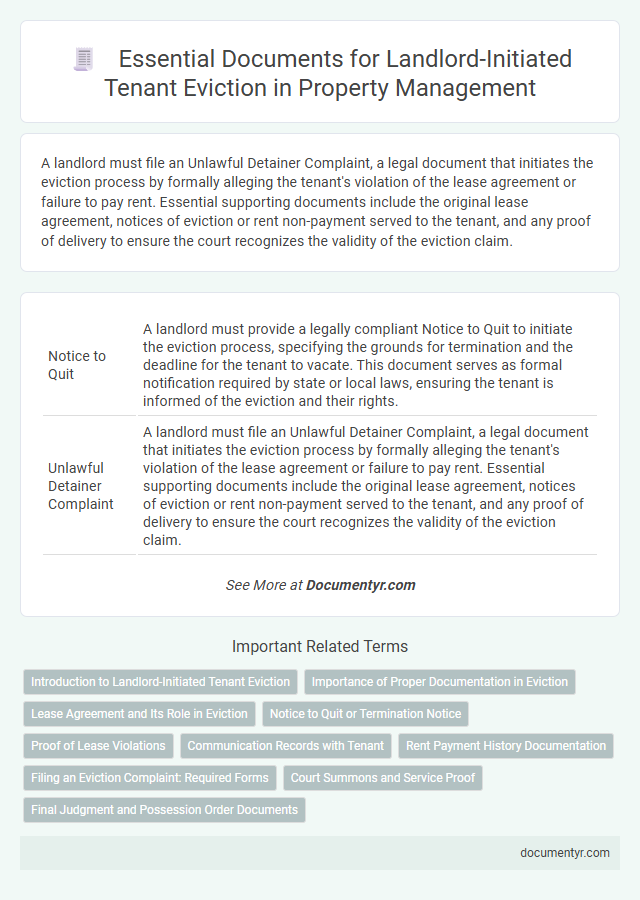
A landlord needs key documents such as the lease agreement, which outlines the tenant's obligations and grounds for eviction, and a formal eviction notice that complies with local laws specifying the reason and timeline for vacating. Court forms and evidence supporting the eviction grounds, like payment records or violation notices, are crucial for filing a legal eviction proceeding. Maintaining thorough documentation ensures the eviction process is legally compliant and can withstand potential tenant disputes.
What Documents Does a Landlord Need for Evicting a Tenant?
| Number | Name | Description |
|---|---|---|
| 1 | Notice to Quit | A landlord must provide a legally compliant Notice to Quit to initiate the eviction process, specifying the grounds for termination and the deadline for the tenant to vacate. This document serves as formal notification required by state or local laws, ensuring the tenant is informed of the eviction and their rights. |
| 2 | Unlawful Detainer Complaint | A landlord must file an Unlawful Detainer Complaint, a legal document that initiates the eviction process by formally alleging the tenant's violation of the lease agreement or failure to pay rent. Essential supporting documents include the original lease agreement, notices of eviction or rent non-payment served to the tenant, and any proof of delivery to ensure the court recognizes the validity of the eviction claim. |
| 3 | Proof of Service Affidavit | A Proof of Service Affidavit is a critical document in the eviction process, verifying that the landlord has properly delivered the eviction notice to the tenant according to legal requirements. This affidavit, signed by the process server or landlord, ensures the court acknowledges the tenant was duly informed, supporting the landlord's case in eviction proceedings. |
| 4 | Lease Termination Letter | A landlord needs a properly drafted lease termination letter that clearly states the reason for eviction, the date by which the tenant must vacate, and references the lease agreement terms. This document serves as official notice and is often required by local laws to validate the eviction process. |
| 5 | Rent Ledger Statement | A rent ledger statement is a crucial document for a landlord to prove unpaid rent or late payments, detailing each transaction between tenant and landlord. This ledger supports the eviction case by providing a clear, chronological record of rent payments, outstanding balances, and any applied fees or credits. |
| 6 | Declaration of COVID-19 Hardship (if applicable) | A landlord must present a Declaration of COVID-19 Hardship when evicting a tenant facing financial difficulties due to pandemic-related hardships, ensuring compliance with local eviction moratoriums. This document verifies the tenant's inability to pay rent and supports the legal process for eviction under government relief provisions. |
| 7 | Landlord Verification Affidavit | A Landlord Verification Affidavit is a crucial document required in many jurisdictions to confirm ownership and the landlord's legal right to initiate eviction proceedings. This affidavit typically includes details such as property address, landlord identification, tenant information, and a sworn statement verifying the accuracy of the eviction grounds. |
| 8 | Certified Copy of Lease Agreement | A certified copy of the lease agreement is essential in an eviction process as it serves as official proof of the rental terms and tenant obligations, ensuring the landlord can demonstrate the legal basis for eviction. This document typically includes details on rent amount, payment due dates, lease duration, and any clauses related to tenant violations or grounds for eviction. |
| 9 | Electronic Filing Receipt (e-filing proof) | An Electronic Filing Receipt (e-filing proof) is essential for landlords as it serves as official confirmation that eviction documents have been successfully submitted to the court system. This digital record ensures legal compliance and supports the landlord's case by verifying timely and proper filing in the eviction process. |
| 10 | Stipulated Judgment Agreement | A Stipulated Judgment Agreement is a legally binding document between landlord and tenant outlining agreed-upon terms for eviction, including payment plans or move-out dates. This agreement helps streamline the eviction process by avoiding prolonged litigation and serves as critical evidence in court. |
Introduction to Landlord-Initiated Tenant Eviction
Evicting a tenant is a legal process that requires landlords to follow specific guidelines and present necessary documentation. Proper documentation ensures the eviction is lawful and minimizes disputes.
- Lease Agreement - The lease outlines tenant obligations and is essential for proving breach of contract.
- Notice to Quit - This written notice informs the tenant of the intent to terminate tenancy and must comply with local laws.
- Proof of Non-Payment or Violation - Evidence such as unpaid rent receipts or violation records supports the landlord's eviction claim.
Having these documents prepared accurately streamlines the eviction process and protects landlord rights.
Importance of Proper Documentation in Eviction
Proper documentation is crucial for a landlord to successfully evict a tenant. Clear records ensure legal compliance and protect your rights throughout the eviction process.
Essential documents include the lease agreement, which outlines tenant obligations and grounds for eviction. A written notice specifying the reason for eviction and the timeline for tenant response is necessary. Court filings and any communication records support your case during legal proceedings.
Lease Agreement and Its Role in Eviction
The lease agreement is a crucial document that outlines the terms and conditions between landlord and tenant, serving as the foundation for any eviction process. Understanding its role helps ensure compliance with legal requirements when evicting a tenant.
- Lease Agreement Details - The document specifies rent amount, payment deadlines, and tenant responsibilities essential for identifying breach of contract.
- Basis for Eviction Notice - Non-compliance with lease terms provides legal grounds for issuing an eviction notice to the tenant.
- Evidence in Court - The lease agreement acts as primary evidence during eviction hearings to prove the landlord's right to regain property possession.
Notice to Quit or Termination Notice
A landlord must provide a Notice to Quit or Termination Notice to begin the eviction process legally. This document informs the tenant of the required move-out date and the reasons for eviction as per local laws. You should ensure the notice complies with state-specific regulations to avoid delays in eviction proceedings.
Proof of Lease Violations
| Document | Description | Importance in Eviction |
|---|---|---|
| Lease Agreement | Official contract outlining tenant and landlord responsibilities and restrictions. | Serves as the primary reference to establish what constitutes a lease violation. |
| Notice of Violation | Written communication specifying the exact lease terms breached by the tenant. | Demonstrates that the tenant was formally informed about the violation before eviction proceedings. |
| Photographic or Video Evidence | Visual proof of property damage, unauthorized occupants, or prohibited activities. | Supports claims of lease violations with concrete, verifiable evidence. |
| Witness Statements | Accounts from neighbors, property managers, or others who observed lease breaches. | Corroborates the landlord's claims when direct evidence is limited. |
| Inspection Reports | Official documentation of property condition and any breaches observed during inspections. | Provides an unbiased record validating lease violations. |
| Correspondence Records | Emails, texts, or letters documenting communications regarding tenant behavior or violations. | Demonstrates ongoing efforts to resolve issues before eviction. |
Communication Records with Tenant
Effective communication records are essential for a landlord when evicting a tenant. These documents include emails, text messages, and written notices that demonstrate your attempts to resolve issues or notify the tenant of lease violations. Maintaining detailed records ensures clear proof of communication throughout the eviction process.
Rent Payment History Documentation
Rent payment history documentation is essential when preparing to evict a tenant. It provides a clear record of missed or late payments that support your eviction case.
This documentation includes rent receipts, bank statements, and written communication regarding payment issues. Keeping accurate and detailed records ensures you have the necessary evidence to present in court.
Filing an Eviction Complaint: Required Forms
What documents does a landlord need for filing an eviction complaint? Landlords must prepare specific forms to initiate the eviction process. The primary document is the eviction complaint or unlawful detainer form, which formally states the reasons for eviction.
Court Summons and Service Proof
A landlord must obtain a court summons to initiate the eviction process legally. This official document notifies the tenant of the eviction lawsuit and the required court appearance.
Proof of service is essential to demonstrate that the tenant has been properly notified of the court summons. Common methods for serving these documents include personal delivery, certified mail, or posting at the tenant's residence.
What Documents Does a Landlord Need for Evicting a Tenant? Infographic