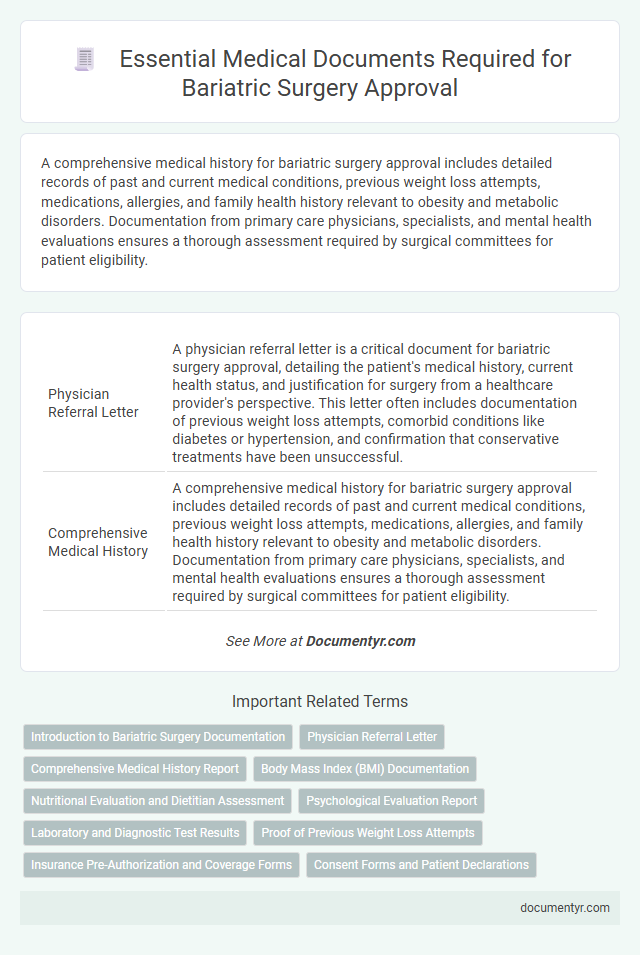
Patients seeking bariatric surgery approval must provide comprehensive medical documents including a detailed medical history, recent lab results, and documented evidence of prior weight loss attempts. A psychological evaluation report and clearance from a primary care physician or specialist are essential to confirm the patient's readiness and suitability for surgery. Insurance companies often require these documents to ensure all medical criteria and guidelines are met before granting approval.
What Medical Documents Does a Patient Need for Bariatric Surgery Approval?
| Number | Name | Description |
|---|---|---|
| 1 | Physician Referral Letter | A physician referral letter is a critical document for bariatric surgery approval, detailing the patient's medical history, current health status, and justification for surgery from a healthcare provider's perspective. This letter often includes documentation of previous weight loss attempts, comorbid conditions like diabetes or hypertension, and confirmation that conservative treatments have been unsuccessful. |
| 2 | Comprehensive Medical History | A comprehensive medical history for bariatric surgery approval includes detailed records of past and current medical conditions, previous weight loss attempts, medications, allergies, and family health history relevant to obesity and metabolic disorders. Documentation from primary care physicians, specialists, and mental health evaluations ensures a thorough assessment required by surgical committees for patient eligibility. |
| 3 | Physical Examination Report | A comprehensive Physical Examination Report is essential for bariatric surgery approval, detailing the patient's current health status, vital signs, and any comorbid conditions such as hypertension or diabetes. This report must be authored by a licensed healthcare professional to confirm the patient's fitness for surgery and identify potential risks or contraindications. |
| 4 | Body Mass Index (BMI) Documentation | Precise Body Mass Index (BMI) documentation is crucial for bariatric surgery approval, typically requiring a BMI of 40 or higher, or a BMI of 35 with obesity-related comorbidities such as type 2 diabetes or hypertension. Medical records must include recent weight and height measurements alongside detailed physician assessments confirming BMI calculations to comply with insurance and surgical guidelines. |
| 5 | Specialist Consultation Reports | Specialist consultation reports are critical for bariatric surgery approval, providing detailed evaluations from endocrinologists, cardiologists, and pulmonologists to assess comorbidities such as diabetes, hypertension, and sleep apnea. These reports ensure a comprehensive medical history, confirm the patient's fitness for surgery, and support the necessity of the procedure for weight-related health improvement. |
| 6 | Nutritional Evaluation/Assessment | A comprehensive nutritional evaluation conducted by a registered dietitian is essential for bariatric surgery approval, documenting a patient's dietary habits, nutrient intake, metabolic status, and readiness for postoperative lifestyle changes. This assessment includes detailed records of past weight loss attempts, eating behaviors, nutrient deficiencies, and a tailored nutrition plan to ensure optimal surgical outcomes and long-term weight management. |
| 7 | Psychological Evaluation/Assessment | A comprehensive psychological evaluation is essential for bariatric surgery approval, including assessments by licensed mental health professionals to determine the patient's mental readiness and identify conditions such as depression, eating disorders, or substance abuse that may affect surgical outcomes. This evaluation often involves standardized questionnaires, clinical interviews, and reports that demonstrate the patient's understanding of lifestyle changes and ability to adhere to postoperative care. |
| 8 | Sleep Study Report (if indicated, e.g., for sleep apnea) | A sleep study report is required for bariatric surgery approval if the patient exhibits symptoms of sleep apnea, providing objective evidence of the condition's severity. This report helps the medical team assess respiratory risks and tailor perioperative care to ensure patient safety. |
| 9 | Laboratory Test Results (blood work, liver function, etc.) | Laboratory test results, including comprehensive blood work, liver function tests, lipid profile, and glucose levels, are essential medical documents required for bariatric surgery approval to assess the patient's overall health and identify potential complications. These tests help surgeons evaluate metabolic conditions, organ function, and nutritional status, ensuring a safe and effective surgical outcome. |
| 10 | Cardiac Clearance/ECG/Echocardiogram | Patients seeking bariatric surgery approval must provide cardiac clearance, which includes a detailed evaluation by a cardiologist to assess cardiovascular risk. Essential documents include an electrocardiogram (ECG) to monitor heart rhythm and an echocardiogram to evaluate heart structure and function, ensuring the patient's cardiac health supports surgical safety. |
| 11 | Pulmonary Clearance (if indicated) | Pulmonary clearance is required for bariatric surgery approval in patients with significant respiratory conditions such as obstructive sleep apnea, chronic obstructive pulmonary disease (COPD), or asthma, ensuring they can tolerate anesthesia and postoperative recovery. This clearance typically includes pulmonary function tests (PFTs), arterial blood gas analysis, and sometimes sleep studies to assess respiratory status and minimize perioperative complications. |
| 12 | Proof of Failed Weight Loss Attempts | Proof of failed weight loss attempts for bariatric surgery approval typically includes documented records of supervised diet programs, physical activity regimens, and behavioral therapy outcomes spanning at least six months to one year. Medical evidence such as physician notes, weight logs, and metabolic assessments demonstrating insufficient or non-sustained weight loss despite adherence to prescribed interventions is crucial for meeting insurance and surgical criteria. |
| 13 | Insurance Pre-authorization Form | Patients seeking bariatric surgery approval typically require an insurance pre-authorization form that includes detailed medical history, documented comorbidities such as diabetes or hypertension, and evidence of prior weight loss efforts. This form ensures insurance coverage by verifying eligibility criteria and medical necessity for the surgical procedure. |
| 14 | Medication List | A comprehensive medication list is essential for bariatric surgery approval, detailing all prescription drugs, over-the-counter medications, and supplements to assess potential interactions and optimize perioperative care. Accurate documentation helps the surgical team manage anesthesia risks and postoperative healing effectively. |
| 15 | Documentation of Comorbid Conditions (e.g., diabetes, hypertension) | Documentation of comorbid conditions such as diabetes and hypertension is essential for bariatric surgery approval, requiring detailed medical records, lab results, and physician notes that demonstrate the severity and management of these illnesses. Accurate evidence of these conditions supports the medical necessity criteria set by insurance providers and surgical committees, facilitating the authorization process. |
| 16 | Consent Form for Bariatric Surgery | The consent form for bariatric surgery is a crucial medical document detailing the procedure's risks, benefits, and alternatives, which patients must thoroughly understand and sign to ensure informed decision-making. This legal document protects both the patient and the medical provider by confirming that the patient agrees to the surgery after receiving comprehensive explanation from the bariatric surgeon. |
| 17 | Preoperative Education Certificate/Attendance Proof | A Preoperative Education Certificate or proof of attendance at a bariatric surgery educational program is essential for surgery approval, demonstrating patient understanding of the procedure, risks, and postoperative lifestyle changes. This document ensures the patient is well-informed and committed to the necessary pre- and post-surgical care, which is critical for successful outcomes in bariatric surgery. |
| 18 | Imaging Studies (abdominal ultrasound/endoscopy, if required) | Imaging studies such as abdominal ultrasound and endoscopy are essential medical documents for bariatric surgery approval, providing detailed evaluation of liver morphology, gallbladder status, and gastric mucosa. These imaging results help identify contraindications like severe fatty liver disease or gastric ulcers, ensuring patient safety and optimal surgical outcomes. |
| 19 | Smoking Cessation Verification (if applicable) | Patients seeking bariatric surgery approval must provide verified documentation of smoking cessation, typically including a physician's note or a negative cotinine test confirming abstinence for a specified period, often 6 months. This verification ensures reduced surgical risks and complies with insurance requirements for preoperative clearance. |
| 20 | Vaccination Records (as required) | Vaccination records are essential medical documents required for bariatric surgery approval, ensuring patients are protected against preventable infections that could complicate their recovery. Commonly required immunizations include influenza, pneumococcal, hepatitis B, and COVID-19 vaccines, as verified by healthcare providers before surgery clearance. |
Introduction to Bariatric Surgery Documentation
| Introduction to Bariatric Surgery Documentation | |
|---|---|
| Purpose | Bariatric surgery documentation is essential for verifying patient eligibility and obtaining insurance approval. |
| Core Documents Required | Medical history records, Body Mass Index (BMI) calculations, and prior weight loss efforts. |
| Medical Evaluations | Comprehensive physical examination, psychological assessment, and nutritional evaluation reports. |
| Laboratory Tests | Blood panels, metabolic profiles, and hormone level tests. |
| Physician Recommendations | Detailed surgeon and primary care provider notes supporting the medical necessity of bariatric surgery. |
| Insurance Specific Requirements | Pre-authorization forms, documented failed conservative treatments, and compliance with insurer protocols. |
Physician Referral Letter
Physician referral letters play a critical role in the approval process for bariatric surgery. These medical documents confirm the patient's eligibility and medical necessity for the procedure.
- Document Purpose - The referral letter verifies the patient's diagnosis of obesity and related comorbidities requiring surgical intervention.
- Content Requirements - It must include detailed medical history, previous weight loss attempts, and justification for bariatric surgery based on clinical guidelines.
- Physician Credentials - The letter should be authored by a licensed physician experienced in managing obesity to ensure credibility and compliance with insurance policies.
Comprehensive Medical History Report
A Comprehensive Medical History Report is essential for bariatric surgery approval. This document provides a detailed overview of your health status and past medical conditions.
- Current Medications - A list of all medications you are taking to understand potential risks and medication management during surgery.
- Previous Surgeries and Hospitalizations - Documentation of any prior surgical procedures and hospital stays to assess surgical risk and recovery considerations.
- Chronic Conditions - Detailed records of chronic illnesses such as diabetes, hypertension, or heart disease to evaluate overall health and determine eligibility for surgery.
Body Mass Index (BMI) Documentation
Body Mass Index (BMI) documentation is a crucial medical record for bariatric surgery approval. Accurate BMI calculations confirm eligibility based on established clinical guidelines.
Your BMI must be documented by a healthcare professional through recent height and weight measurements. This documentation verifies that you meet the required BMI threshold, usually above 40 or above 35 with obesity-related health conditions. Consistent records ensure insurance providers and surgical teams approve the procedure confidently.
Nutritional Evaluation and Dietitian Assessment
Medical documentation plays a crucial role in the approval process for bariatric surgery. Nutritional evaluation and dietitian assessment are key components of this documentation to ensure patient readiness and safety.
- Nutritional Evaluation - This assessment reviews your current dietary habits to identify any nutritional deficiencies or risks.
- Dietitian Assessment - A registered dietitian evaluates your ability to follow pre- and post-surgery dietary guidelines for optimal recovery.
- Medical Records Inclusion - Both evaluations must be documented and submitted as part of the comprehensive bariatric surgery approval requirements.
Providing complete and accurate nutritional and dietitian assessments increases the likelihood of timely approval for your bariatric surgery.
Psychological Evaluation Report
A Psychological Evaluation Report is a critical document required for bariatric surgery approval. This report assesses your mental health to ensure you are prepared for the lifestyle changes following the procedure.
The evaluation examines conditions such as depression, anxiety, and eating disorders that could impact surgical outcomes. Surgeons rely on this report to confirm that you have the emotional resilience and support system needed for long-term success.
Laboratory and Diagnostic Test Results
What laboratory and diagnostic test results are required for bariatric surgery approval? Your healthcare provider needs these results to evaluate your overall health and readiness for surgery. Common tests include blood work to check metabolic function, imaging studies, and cardiac evaluations.
Proof of Previous Weight Loss Attempts
Proof of previous weight loss attempts is a crucial medical document required for bariatric surgery approval. This documentation demonstrates your commitment to non-surgical weight loss methods, such as medically supervised diets, exercise programs, or weight management counseling. Clear records from healthcare providers outlining the duration and outcomes of these attempts strengthen the case for bariatric surgery candidacy.
Insurance Pre-Authorization and Coverage Forms
Insurance pre-authorization is a critical step in obtaining approval for bariatric surgery. Patients must provide detailed medical documents that demonstrate eligibility according to insurance requirements.
Common documents include a physician's letter of medical necessity, lab test results, and a documented history of previous weight loss attempts. Coverage forms often require documentation of comorbid conditions such as diabetes or hypertension to validate the need for surgery.
What Medical Documents Does a Patient Need for Bariatric Surgery Approval? Infographic