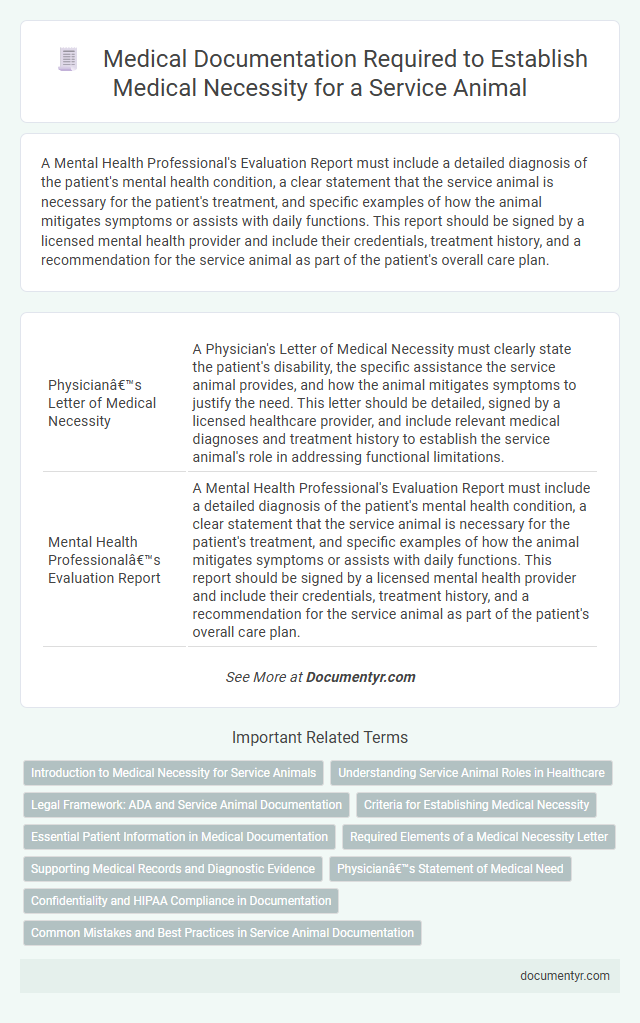
Medical documents needed to prove medical necessity for a service animal typically include a detailed letter or prescription from a licensed healthcare professional, such as a physician, psychiatrist, or therapist, outlining the patient's disability and explaining how the service animal assists with specific medical needs. Comprehensive medical records documenting the diagnosis, treatment history, and functional limitations related to the disability support the necessity of the service animal. These documents must clearly demonstrate the link between the patient's condition and the essential role of the service animal in mitigating symptoms or enhancing daily functioning.
What Medical Documents are Needed to Prove Medical Necessity for a Service Animal?
| Number | Name | Description |
|---|---|---|
| 1 | Physician’s Letter of Medical Necessity | A Physician's Letter of Medical Necessity must clearly state the patient's disability, the specific assistance the service animal provides, and how the animal mitigates symptoms to justify the need. This letter should be detailed, signed by a licensed healthcare provider, and include relevant medical diagnoses and treatment history to establish the service animal's role in addressing functional limitations. |
| 2 | Mental Health Professional’s Evaluation Report | A Mental Health Professional's Evaluation Report must include a detailed diagnosis of the patient's mental health condition, a clear statement that the service animal is necessary for the patient's treatment, and specific examples of how the animal mitigates symptoms or assists with daily functions. This report should be signed by a licensed mental health provider and include their credentials, treatment history, and a recommendation for the service animal as part of the patient's overall care plan. |
| 3 | Disability Assessment Form | A Disability Assessment Form is a critical medical document required to prove medical necessity for a service animal, detailing the patient's diagnosis, functional limitations, and specific need for the animal's assistance. This form must be completed by a licensed healthcare professional, providing authoritative validation of the disability and the direct relationship between the service animal's tasks and the patient's medical condition. |
| 4 | Medical Diagnosis Statement | A Medical Diagnosis Statement from a licensed healthcare professional is essential to prove medical necessity for a service animal, detailing the patient's disability and how the animal alleviates specific symptoms. This document must include the healthcare provider's credentials, the patient's diagnosis, and a clear explanation of the service animal's role in managing or mitigating the disability. |
| 5 | Treatment Plan Documentation | Treatment plan documentation must clearly outline the patient's diagnosed medical condition, the necessity of the service animal in mitigating specific symptoms or disabilities, and the expected therapeutic benefits. Detailed notes from licensed healthcare professionals, including goals, frequency, and methods of treatment involving the service animal, are critical for validating medical necessity. |
| 6 | ADA (Americans with Disabilities Act) Accommodation Request | To prove medical necessity for a service animal under an ADA accommodation request, detailed documentation from a licensed healthcare provider confirming the individual's disability and the specific tasks the service animal performs to mitigate that disability is essential. Supporting medical records, treatment history, and a clear explanation linking the service animal's role to the functional limitations caused by the disability strengthen the accommodation claim. |
| 7 | Prescription for Service Animal | A prescription for a service animal must be issued by a licensed healthcare provider, detailing the patient's diagnosis and explaining how the animal assists in managing specific medical conditions. This document serves as critical evidence of medical necessity, ensuring compliance with legal standards for the use of service animals. |
| 8 | Functional Limitation Assessment | A comprehensive Functional Limitation Assessment must detail the specific impairments that substantially limit the individual's ability to perform major life activities, directly supporting the need for a service animal. Medical records should include diagnostic evaluations, treatment history, and clinical observations demonstrating how the service animal mitigates these functional limitations. |
| 9 | Progress Notes from Treating Provider | Progress notes from the treating provider are essential medical documents to prove medical necessity for a service animal, detailing the patient's diagnosis, functional limitations, and the direct correlation between the service animal's tasks and the patient's disability. Comprehensive and timely progress notes support the justification by demonstrating ongoing clinical evaluation and the provider's professional assessment of how the service animal mitigates specific symptoms or enhances the patient's ability to perform daily activities. |
| 10 | Summary of Clinical Findings | Summary of clinical findings must include a detailed diagnosis of the mental or physical disability, clear evidence of how the disability substantially limits major life activities, and specific documentation illustrating the direct connection between the condition and the need for a service animal. Comprehensive clinical assessments, psychiatric evaluations, and treatment history substantiate the medical necessity by demonstrating functional impairments and the therapeutic benefits provided by the animal. |
| 11 | Patient History & Physical Examination Records | Patient history and physical examination records must detail the diagnosed disability and the functional limitations necessitating the use of a service animal to establish medical necessity. Comprehensive documentation should include the patient's symptoms, prior treatments, and clinical findings demonstrating how the service animal mitigates specific impairments. |
| 12 | Letter of Support from Licensed Healthcare Provider | A Letter of Support from a licensed healthcare provider is essential to prove medical necessity for a service animal, detailing the patient's disability and how the animal mitigates specific functional limitations. This document must be current, include the provider's credentials, and explicitly link the service animal's tasks to the patient's diagnosed condition. |
| 13 | Documentation of Current Medical Condition | Documentation of the current medical condition must include detailed records from a licensed healthcare provider outlining the diagnosis, prognosis, and how the service animal directly alleviates symptoms or improves the patient's functional limitations. Medical necessity is supported by comprehensive clinical notes, treatment plans, and evidence of ongoing care that demonstrate the essential role of the service animal in managing a specific disability. |
| 14 | Proof of Ongoing Treatment or Therapy | Medical documentation required to prove medical necessity for a service animal includes detailed treatment records or therapy progress notes from licensed healthcare providers demonstrating the patient's ongoing management of a disability or medical condition. These documents should specify how the service animal directly supports or alleviates the effects of the disability, ensuring compliance with legal standards for service animal accommodation. |
| 15 | Specialist Recommendation Letter | A specialist recommendation letter is crucial in proving medical necessity for a service animal, as it must clearly state the patient's diagnosed disability and how the service animal mitigates specific functional limitations. This document typically includes the specialist's credentials, detailed medical history, and explicit treatment plans demonstrating the essential role of the service animal in the patient's therapeutic regimen. |
| 16 | List of Prescribed Medications | A comprehensive list of prescribed medications, including dosages and prescribing physicians, is essential to demonstrate the patient's ongoing treatment and need for a service animal. This medical documentation supports the legitimacy of the underlying medical condition requiring the assistance of the service animal. |
| 17 | Rehabilitation or Therapy Records | Rehabilitation or therapy records must clearly document the medical condition requiring the service animal, detailing the patient's progress and specific functional limitations the animal helps mitigate. These records should include evaluations from licensed therapists or medical professionals confirming that the animal's presence is essential for the patient's daily therapeutic or rehabilitative needs. |
| 18 | Psychological Evaluation Report | A Psychological Evaluation Report is essential to prove medical necessity for a service animal, as it provides a detailed assessment of the individual's mental health condition and documents how the service animal mitigates symptoms or disabilities. This report, typically completed by a licensed mental health professional, includes diagnosis, treatment history, and a clear rationale linking the service animal to therapeutic benefits. |
Introduction to Medical Necessity for Service Animals
Medical necessity for service animals requires proper documentation to demonstrate the need for the animal's assistance. Understanding the essential medical documents helps ensure compliance with healthcare and legal standards.
These documents validate that Your condition warrants the support a service animal provides.
- Physician's Statement - A detailed note from a licensed healthcare provider confirming the diagnosis and explaining how the service animal assists with specific medical needs.
- Medical Records - Comprehensive records showing the history and treatment of the condition requiring the service animal for daily functioning.
- Care Plan or Treatment Plan - Documentation outlining ongoing medical care that includes the role of the service animal in improving health outcomes.
Understanding Service Animal Roles in Healthcare
What medical documents are needed to prove medical necessity for a service animal? Medical necessity for a service animal requires documentation from a licensed healthcare professional confirming the patient's disability and the animal's role in mitigating symptoms. Commonly accepted documents include a detailed letter or medical certification outlining the specific needs related to the service animal.
How do service animal roles impact healthcare settings? Service animals perform critical tasks such as guiding individuals with visual impairments, alerting to seizures, or providing psychiatric support. Clear documentation helps healthcare providers understand the patient's reliance on the service animal for essential medical support.
Which healthcare providers can authorize the need for a service animal? Licensed professionals such as physicians, psychologists, or nurse practitioners can provide the necessary medical documentation. Their assessments validate the connection between the patient's disability and the need for a service animal to ensure compliance with legal and healthcare standards.
What information should be included in the medical certification for a service animal? The certification must specify the patient's disability, describe how the service animal assists in alleviating symptoms, and affirm the necessity of the animal for medical reasons. Comprehensive documentation supports patient rights under laws like the Americans with Disabilities Act (ADA).
Legal Framework: ADA and Service Animal Documentation
The Americans with Disabilities Act (ADA) establishes the legal framework requiring service animals to be allowed in public spaces to assist individuals with disabilities. Medical documentation must clearly demonstrate the individual's disability and the necessity of the animal for medical support or assistance. Essential documents include a physician's note or medical certification detailing the disability, the specific tasks the service animal performs, and how these tasks mitigate the disability's impact.
Criteria for Establishing Medical Necessity
Medical necessity for a service animal is established through comprehensive documentation from licensed healthcare professionals. These documents must clearly describe the patient's disability and explain how the service animal mitigates specific functional limitations related to that condition.
Essential medical documents include a detailed letter or prescription from a physician, psychiatrist, or licensed mental health professional. This documentation should outline the nature of the disability, the connection between the disability and the need for a service animal, and the expected benefits of the service animal in aiding the patient's daily activities.
Essential Patient Information in Medical Documentation
Medical documentation proving the necessity of a service animal must include specific patient information to validate the medical condition and support the request. Essential details in these documents ensure accurate assessment by healthcare providers and relevant authorities.
- Diagnosis of Disability - Clear identification of the patient's medical condition directly related to the need for a service animal.
- Functional Limitations - Detailed description of how the disability impairs daily activities and how the service animal assists in mitigating these limitations.
- Provider Credentials and Contact - Inclusion of the healthcare professional's qualifications and contact information to confirm the document's authenticity and allow for further verification.
Required Elements of a Medical Necessity Letter
Medical documentation is essential to establish the necessity of a service animal for an individual's health condition. A well-prepared medical necessity letter serves as the key document to verify this need.
- Diagnosis Confirmation - The letter must include a clear diagnosis from a licensed medical professional confirming the patient's disability or medical condition.
- Functional Limitation Description - It should specify how the medical condition substantially limits one or more major life activities, necessitating the use of a service animal.
- Service Animal's Role - The letter must detail how the service animal is trained to assist with specific symptoms or challenges related to the patient's medical condition.
Compliance with these elements ensures the medical necessity letter meets legal and medical standards for service animal support.
Supporting Medical Records and Diagnostic Evidence
Medical necessity for a service animal must be supported by comprehensive medical documents. These documents provide clear evidence of the patient's condition and the need for assistance by the animal.
Supporting medical records should include detailed clinician notes, treatment history, and documentation of the patient's disability or medical condition. Diagnostic evidence such as test results, imaging studies, or psychological evaluations further substantiate the medical necessity. Combined, these records establish a factual basis for the service animal's role in improving the patient's health and daily functioning.
Physician’s Statement of Medical Need
| Document Type | Description | Key Elements | Purpose |
|---|---|---|---|
| Physician's Statement of Medical Need | A formal letter or document written by a licensed healthcare provider verifying the medical necessity of a service animal for the patient. |
|
To confirm that the service animal is required for your health and well-being as part of medical treatment or management. |
Confidentiality and HIPAA Compliance in Documentation
Medical documents proving medical necessity for a service animal typically include a detailed letter from a licensed healthcare provider stating the patient's disability and explaining how the service animal mitigates specific symptoms. This documentation must clearly link the need for the service animal to the medical condition to satisfy insurance or legal requirements.
Maintaining confidentiality under HIPAA is crucial when handling these medical records, ensuring that your sensitive health information is protected and only shared with authorized parties. Providers must implement strict protocols to secure documentation, preventing unauthorized access and safeguarding patient privacy at all times.
What Medical Documents are Needed to Prove Medical Necessity for a Service Animal? Infographic