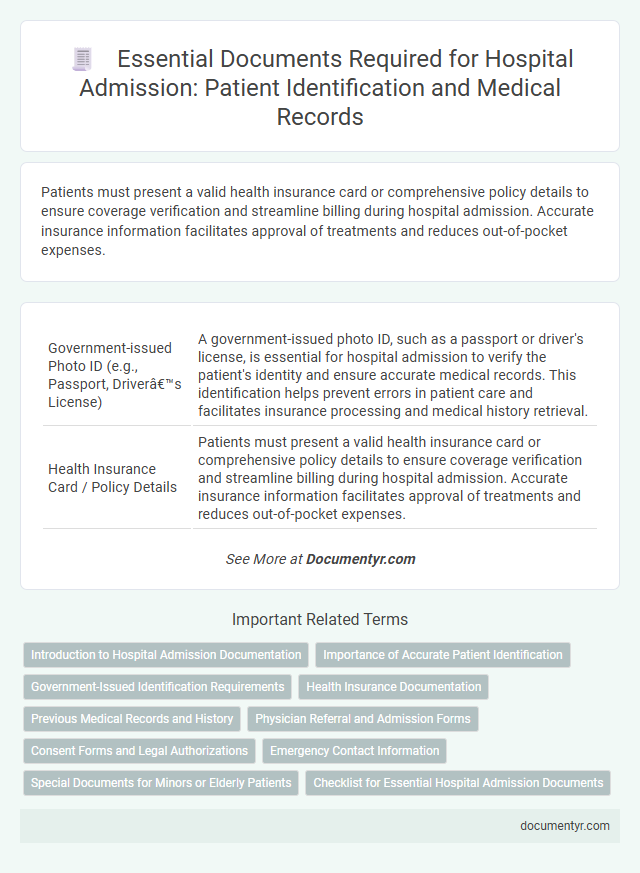
Patients must bring a valid photo ID, insurance card, and any referral documents required by the hospital for admission. Essential medical records, including previous test results, medication lists, and advance directives, help ensure accurate diagnosis and treatment. Having these documents readily available facilitates a smooth admission process and reduces delays in care.
What Documents Does a Patient Need for Hospital Admission?
| Number | Name | Description |
|---|---|---|
| 1 | Government-issued Photo ID (e.g., Passport, Driver’s License) | A government-issued photo ID, such as a passport or driver's license, is essential for hospital admission to verify the patient's identity and ensure accurate medical records. This identification helps prevent errors in patient care and facilitates insurance processing and medical history retrieval. |
| 2 | Health Insurance Card / Policy Details | Patients must present a valid health insurance card or comprehensive policy details to ensure coverage verification and streamline billing during hospital admission. Accurate insurance information facilitates approval of treatments and reduces out-of-pocket expenses. |
| 3 | Doctor’s Referral Letter | A doctor's referral letter is a critical document for hospital admission, providing detailed medical history, diagnosis, and recommended treatment from the primary care physician or specialist. This letter facilitates proper patient assessment, ensures appropriate care planning, and expedites the admission process by verifying the medical necessity for hospitalization. |
| 4 | Previous Medical Records / Reports | Previous medical records and reports are essential for hospital admission, providing doctors with comprehensive information on a patient's medical history, allergies, past treatments, and diagnostic results. Having these documents on hand ensures accurate diagnosis, effective treatment planning, and continuity of care during the hospital stay. |
| 5 | Hospital Admission Form | The hospital admission form is a critical document that collects essential patient information including personal details, medical history, insurance data, and consent for treatment. Accurate completion of this form ensures efficient processing, proper medical care, and facilitates communication between healthcare providers and the patient. |
| 6 | Emergency Contact Information | Patients must provide accurate emergency contact information during hospital admission to ensure timely communication with family or designated individuals in critical situations. This information typically includes full names, phone numbers, relationships, and alternative contacts to facilitate urgent updates and consent for medical decisions. |
| 7 | Consent for Treatment Form | A Consent for Treatment Form is a critical document required for hospital admission, ensuring the patient has authorized medical procedures and interventions. This form protects both the patient's rights and the hospital's legal responsibilities by confirming informed consent before any treatment begins. |
| 8 | List of Current Medications | A patient must provide a comprehensive list of current medications during hospital admission, including prescription drugs, over-the-counter remedies, vitamins, and supplements. This information ensures accurate medication reconciliation, prevents adverse drug interactions, and guides safe and effective treatment planning. |
| 9 | Allergy Information Document | A detailed Allergy Information Document is crucial for hospital admission, as it provides healthcare professionals with accurate data on a patient's known drug, food, and environmental allergies, preventing adverse reactions during treatment. This document should include specific allergens, reaction types, and severity to ensure proper medication administration and personalized care plans. |
| 10 | Advance Directive / Living Will (if any) | Patients should provide an Advance Directive or Living Will during hospital admission to ensure their healthcare preferences are respected. These legal documents outline specific wishes regarding medical treatment and end-of-life care, guiding healthcare providers in decision-making when patients are unable to communicate. |
| 11 | Guardian or Power of Attorney Papers (if applicable) | Guardian or power of attorney papers are essential documents for hospital admission when a patient is unable to make medical decisions independently. These legal documents authorize a designated individual to consent to treatment and manage healthcare decisions on the patient's behalf, ensuring compliance with hospital policies and protecting patient rights. |
| 12 | Financial Guarantee / Deposit Receipt | Patients must provide a financial guarantee or deposit receipt for hospital admission to confirm payment coverage and secure necessary medical services. This document typically includes proof of insurance or a prepaid deposit, outlining payment responsibilities and serving as a safeguard for hospital billing. |
| 13 | Test Results (Lab, Radiology, etc.) | Test results such as lab reports, radiology images, and diagnostic evaluations are essential documents for hospital admission as they provide critical information for accurate diagnosis and treatment planning. Hospitals require recent and relevant test results to monitor patient condition and avoid duplicate testing, ensuring timely and effective medical care. |
| 14 | Immunization Records (if required) | Patients may need to provide up-to-date immunization records during hospital admission to verify vaccination status and prevent infectious disease outbreaks. These records typically include documentation of vaccines such as influenza, COVID-19, or childhood immunizations, depending on the hospital's protocols and patient age. |
| 15 | Birth Certificate (for minors) | A birth certificate is essential for hospital admission of minors as it verifies the child's identity and legal guardianship, ensuring proper medical authorization and care. Hospitals require this document to confirm the patient's age and parentage, which is critical for treatment decisions and insurance processing. |
Introduction to Hospital Admission Documentation
What documents does a patient need for hospital admission? Hospital admission requires specific documentation to ensure proper identification, medical history, and insurance verification. Providing accurate documents facilitates efficient processing and quality care throughout the hospital stay.
Importance of Accurate Patient Identification
Patients must provide essential documents for hospital admission, including a valid photo ID, insurance information, and a referral or admission form from a healthcare provider. These documents verify the patient's identity and ensure accurate medical records.
Accurate patient identification is crucial to prevent medical errors, such as administering incorrect treatments or medications. Proper identification safeguards patient safety, enhances communication between healthcare staff, and supports efficient hospital operations.
Government-Issued Identification Requirements
Government-issued identification is a critical requirement for hospital admission to verify the patient's identity and ensure accurate medical records. Common forms include a valid passport, driver's license, or national identity card.
You must present original documents that contain your full name, photograph, and date of birth. Hospitals may also require additional proof of residency or insurance information linked to your government ID.
Health Insurance Documentation
Health insurance documentation is essential for hospital admission as it verifies the patient's coverage and eligibility for services. Patients must present their insurance card and any relevant policy information upon arrival.
Hospitals require these documents to process billing and claim submissions accurately. Insurance details help determine the extent of coverage, co-payments, and pre-authorization requirements. Without proper documentation, patients may face delays or unexpected out-of-pocket expenses.
Previous Medical Records and History
Previous medical records and history are crucial documents for hospital admission. These records provide healthcare professionals with detailed information about your past diagnoses, treatments, allergies, and medications. Having accurate and comprehensive medical history ensures better diagnosis, personalized care, and effective treatment planning during your hospital stay.
Physician Referral and Admission Forms
Physician referrals and admission forms are essential documents required for hospital admission. These documents ensure accurate patient information and proper medical evaluation prior to treatment.
- Physician Referral - A formal document from a licensed doctor recommending hospital admission for further diagnosis or treatment.
- Admission Forms - Standardized forms completed by the patient or guardian providing personal, insurance, and medical history details.
- Verification Process - Hospital staff uses these documents to verify patient identity and confirm the need for admission based on the physician's assessment.
Consent Forms and Legal Authorizations
Patients must provide signed consent forms to authorize medical procedures and treatments during hospital admission. Legal authorizations, such as identification and insurance documents, confirm the patient's identity and coverage eligibility. These documents ensure compliance with healthcare regulations and protect both patient rights and hospital responsibilities.
Emergency Contact Information
Emergency contact information is a critical document required for hospital admission. It ensures immediate communication with the patient's designated person in urgent situations.
- Primary Contact Details - Includes the name, phone number, and relationship of the person to be contacted first.
- Secondary Contact Information - Provides an alternative contact if the primary person is unavailable.
- Updated and Accurate Data - Ensures the hospital can reach the emergency contacts without delay during critical moments.
Special Documents for Minors or Elderly Patients
| Document Type | Description | Specific Requirements for Minors | Specific Requirements for Elderly Patients |
|---|---|---|---|
| Identification | Valid photo ID such as driver's license, passport, or national ID card. | Birth certificate or legal guardian's ID is required if the minor lacks a photo ID. | Government-issued ID, which may need to be supplemented with proof of residency or power of attorney if cognitive impairments exist. |
| Consent Forms | Signed consent allowing medical treatment during hospital stay. | Consent must be signed by a parent or legal guardian. | Consent can be signed by the patient or legal authorized representative in case of diminished capacity. |
| Medical Records | Previous medical history, current medications, allergies, and immunization records. | Immunization records and pediatric growth charts are important for minors. | Recent medical summaries and medication lists to assist with complex health needs are crucial. |
| Insurance Information | Health insurance card and related policy documents. | Proof of coverage under a parent's or guardian's insurance policy. | Verification of Medicare, Medicaid, or private insurance plans benefits. |
| Power of Attorney / Legal Guardianship Documents | Legal authorization documents for medical decisions if the patient cannot decide. | Required if the minor has a designated legal guardian different from a parent. | Often necessary for elderly patients with diminished decision-making abilities. |
| Advance Directives / Living Will | Documents specifying patient wishes for treatment preferences. | Rarely applicable unless the minor has a chronic or terminal condition with parental involvement. | Highly recommended for elderly patients to guide end-of-life care decisions. |
What Documents Does a Patient Need for Hospital Admission? Infographic