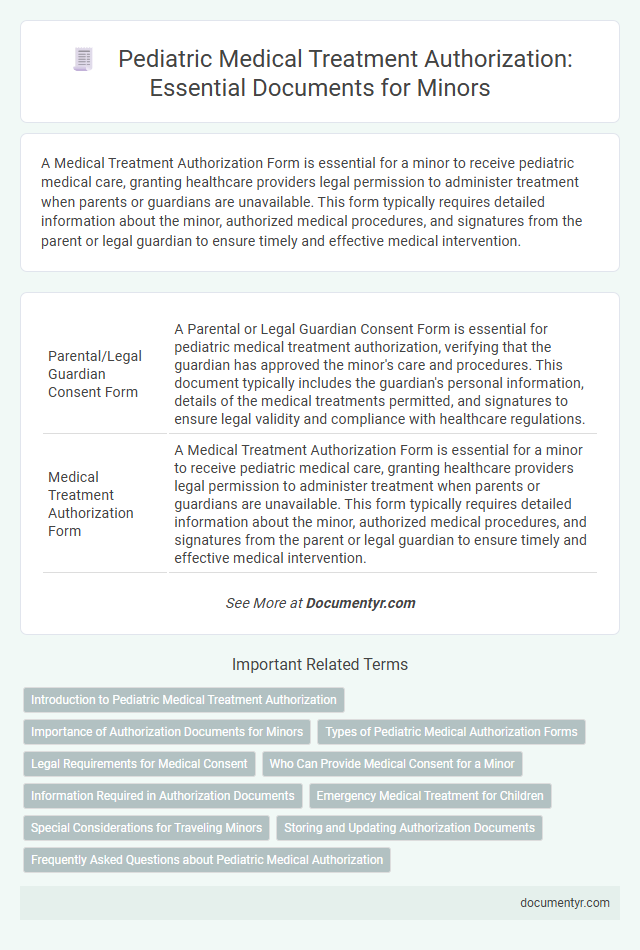
A minor requires specific documents for pediatric medical treatment authorization, including a signed consent form from a parent or legal guardian, proof of guardianship if applicable, and the minor's identification or birth certificate. Health insurance information and any relevant medical history or current medications should also be provided to ensure comprehensive care. These documents help medical providers legally and safely administer treatment to minors.
What Documents Does a Minor Need for Pediatric Medical Treatment Authorization?
| Number | Name | Description |
|---|---|---|
| 1 | Parental/Legal Guardian Consent Form | A Parental or Legal Guardian Consent Form is essential for pediatric medical treatment authorization, verifying that the guardian has approved the minor's care and procedures. This document typically includes the guardian's personal information, details of the medical treatments permitted, and signatures to ensure legal validity and compliance with healthcare regulations. |
| 2 | Medical Treatment Authorization Form | A Medical Treatment Authorization Form is essential for a minor to receive pediatric medical care, granting healthcare providers legal permission to administer treatment when parents or guardians are unavailable. This form typically requires detailed information about the minor, authorized medical procedures, and signatures from the parent or legal guardian to ensure timely and effective medical intervention. |
| 3 | Minor’s Birth Certificate | A minor's birth certificate is a crucial document for pediatric medical treatment authorization as it verifies the child's identity and parental relationships, ensuring proper consent from legal guardians. Healthcare providers require this official record to confirm guardianship and comply with legal and institutional policies before administering medical care. |
| 4 | Parent/Legal Guardian Identification (ID) | A minor requires parent or legal guardian identification such as a valid government-issued ID (driver's license, passport, or state ID) to authorize pediatric medical treatment. Healthcare providers use this identification to verify the guardian's legal authority, ensuring proper consent and compliance with medical regulations. |
| 5 | Health Insurance Card | A minor needs to present a valid health insurance card to authorize pediatric medical treatment, as it confirms coverage and facilitates billing. This card contains essential information including the policy number, insured party details, and coverage limits critical for verifying eligibility during medical visits. |
| 6 | Immunization Records | Immunization records are essential for pediatric medical treatment authorization, serving as proof of a child's vaccination history to ensure compliance with health guidelines and prevent communicable diseases. Healthcare providers require these documents to verify timely immunizations, facilitate appropriate care, and support consent processes for treatments. |
| 7 | Power of Attorney (for Temporary Guardians) | A minor requires a Power of Attorney document granting temporary guardians authorization to make pediatric medical decisions on their behalf, specifying the scope and duration of medical consent. This legal document ensures healthcare providers can proceed with treatment when parents or legal guardians are unavailable. |
| 8 | Court Order of Guardianship (if applicable) | A Court Order of Guardianship is a critical document required for pediatric medical treatment authorization when a minor's legal guardianship has been designated by the court. This order verifies the guardian's legal authority to make healthcare decisions and ensures medical providers comply with jurisdictional requirements for treatment consent. |
| 9 | Emergency Contact Information Form | An Emergency Contact Information Form is essential for pediatric medical treatment authorization, providing healthcare providers with immediate access to authorized individuals for consent or emergencies. This document typically includes the minor's details, primary caregiver contacts, and alternative emergency contacts to ensure timely communication and care during urgent medical situations. |
| 10 | Release of Medical Information Form | A Release of Medical Information Form is essential for authorizing pediatric medical treatment, allowing healthcare providers to access a minor's medical records and share necessary information with parents or guardians. This document ensures proper communication between medical professionals and authorized individuals, facilitating timely and informed treatment decisions. |
| 11 | Minor’s Medical History Questionnaire | A Minor's Medical History Questionnaire is essential for pediatric medical treatment authorization, providing comprehensive details about the child's past illnesses, allergies, immunizations, and current medications. This document ensures accurate diagnosis and tailored medical care by informing healthcare providers of the minor's health background before treatment. |
| 12 | Travel Consent Letter (for out-of-state/country care) | A Travel Consent Letter is essential for minors receiving pediatric medical treatment out-of-state or abroad, authorizing healthcare providers to deliver necessary care when parents or guardians are not present. This document must include detailed information about the minor, the authorized caretaker, specific medical permissions, and valid signatures to comply with legal and medical requirements. |
| 13 | Advance Directive for Minors (if required by jurisdiction) | Minors may need an Advance Directive for medical treatment authorization in jurisdictions that require it, specifying their healthcare preferences in situations where they cannot communicate. This document ensures healthcare providers follow legally recognized instructions regarding consent, treatment options, and end-of-life care decisions for the minor. |
| 14 | Foster Care Authorization Documents (if applicable) | Foster care authorization documents required for pediatric medical treatment include a valid foster care placement agreement, court orders granting temporary legal custody to the foster parent or agency, and a medical consent form signed by the authorized foster care representative. These documents verify the caregiver's authority to consent to medical procedures, ensuring compliance with state laws and facilitating timely pediatric treatment. |
Introduction to Pediatric Medical Treatment Authorization
Pediatric medical treatment authorization is essential for minors to receive healthcare services when legal guardians are not present. This authorization ensures that medical providers have the necessary consent to deliver appropriate care.
- Parent or Guardian Identification - Valid government-issued identification verifies the authority of the person granting consent.
- Consent Form - A signed document explicitly stating permission for medical treatment of the minor.
- Proof of Relationship - Documentation such as a birth certificate or custody papers establishes the connection between the minor and the consenting adult.
Understanding these document requirements helps you prepare for smooth and timely pediatric medical treatment authorization.
Importance of Authorization Documents for Minors
Authorization documents are essential for minors to receive medical treatment, ensuring legal consent is properly granted. These documents protect both healthcare providers and the minor by verifying permission to administer necessary care.
Common documents include a signed consent form from a parent or legal guardian, proof of guardianship, and identification for the minor. Your prompt submission of these documents facilitates timely and effective pediatric medical treatment.
Types of Pediatric Medical Authorization Forms
Minors require specific documents for pediatric medical treatment authorization to ensure legal consent. These documents vary depending on the healthcare provider and the nature of the treatment.
Common types include Consent to Treat forms, which allow healthcare providers to perform medical procedures. Another essential document is the Medical Power of Attorney, granting a designated adult the authority to make healthcare decisions on behalf of the minor.
Legal Requirements for Medical Consent
| Document | Description |
|---|---|
| Parental Consent Form | Legal document signed by a parent or legal guardian granting permission for medical treatment of the minor. Essential for any pediatric medical procedure. |
| Proof of Guardianship | Official court documents establishing legal guardianship, required if the person consenting is not the biological parent. |
| Identification of Minor | Birth certificate or government-issued ID confirming the minor's identity and age, facilitating accurate medical records and treatment plans. |
| Medical Release Authorization | Authorization form permitting healthcare providers to share the minor's medical information with designated individuals, ensuring continuity of care. |
| Emergency Contact Information | Contact details for parents or guardians, critical during urgent pediatric medical situations to ensure immediate communication. |
Who Can Provide Medical Consent for a Minor
Minors require proper medical consent documentation for pediatric treatments to ensure legal authorization. Knowing who can provide this consent is crucial for your child's timely and safe medical care.
- Parents or Legal Guardians - They are the primary individuals authorized to give medical consent for a minor's treatment.
- Court-Appointed Guardians - Individuals appointed by the court hold legal authority to consent on behalf of the minor.
- Authorized Caregivers with Consent Forms - Caregivers granted consent through notarized documents can provide medical authorization when parents are unavailable.
Information Required in Authorization Documents
Authorization documents for pediatric medical treatment must include the minor's full name, date of birth, and parent or guardian contact information. The document should specify the scope of medical treatments authorized, including any limitations or specific instructions from the parent or guardian. Legal identification of the parent or guardian, such as a government-issued ID, and their signature with the date are essential to validate the authorization form.
Emergency Medical Treatment for Children
Minors require specific authorization documents for pediatric medical treatment, especially in emergencies. These documents ensure timely and appropriate care when a parent or guardian is unavailable.
Emergency medical treatment for children often requires a completed consent form signed by a parent or legal guardian. A valid photo ID of the parent or guardian, and the child's insurance information are also necessary. You may need to provide proof of guardianship or custody if applicable.
Special Considerations for Traveling Minors
Minors require specific documents for pediatric medical treatment authorization, especially when traveling without a parent or legal guardian. Special considerations help ensure timely medical care and legal compliance during emergencies abroad.
- Parental Consent Form - A notarized consent form signed by a parent or legal guardian authorizing medical treatment is essential for traveling minors.
- Copy of Minor's Identification - A birth certificate or passport verifies the child's identity and age during medical emergencies.
- Travel Authorization Letter - A letter from the parent or guardian granting permission for the minor to receive medical treatment while traveling, often required by healthcare providers and authorities.
Storing and Updating Authorization Documents
Minors require specific authorization documents for pediatric medical treatment, including a signed consent form from a parent or legal guardian. These documents should be securely stored in the medical provider's records to ensure quick access during emergencies or routine care. Regular updates of authorization forms are essential to reflect any changes in custody or guardianship, maintaining compliance with legal and medical standards.
What Documents Does a Minor Need for Pediatric Medical Treatment Authorization? Infographic