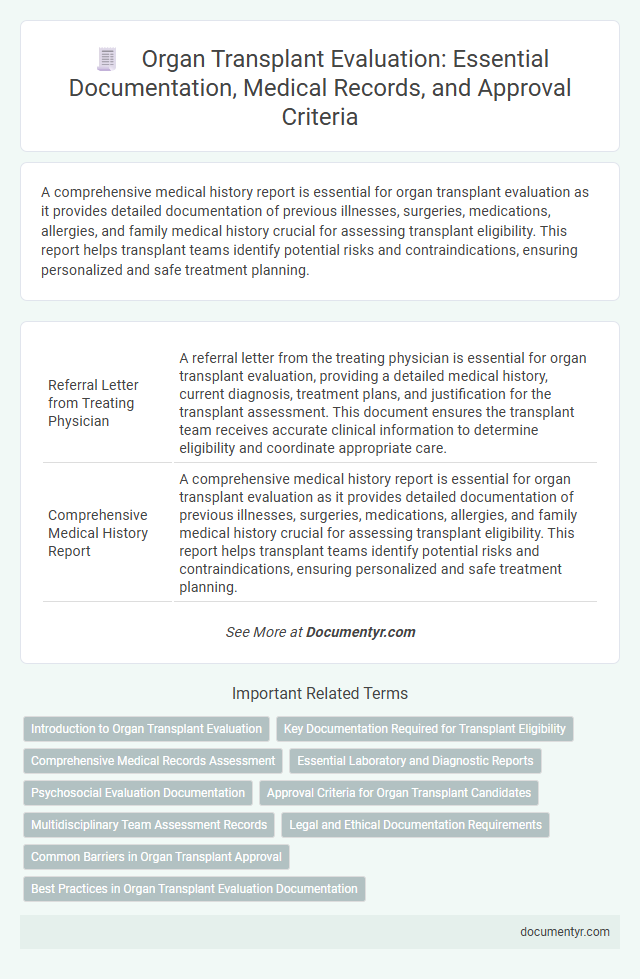
Essential documents for organ transplant evaluation include detailed medical records, laboratory test results, imaging studies, and a comprehensive list of current medications. Patient identification and insurance information are required to verify eligibility and coverage. Psychological assessments and consent forms must also be submitted to ensure the patient's readiness and understanding of the transplant process.
What Documents Are Necessary for Organ Transplant Evaluation?
| Number | Name | Description |
|---|---|---|
| 1 | Referral Letter from Treating Physician | A referral letter from the treating physician is essential for organ transplant evaluation, providing a detailed medical history, current diagnosis, treatment plans, and justification for the transplant assessment. This document ensures the transplant team receives accurate clinical information to determine eligibility and coordinate appropriate care. |
| 2 | Comprehensive Medical History Report | A comprehensive medical history report is essential for organ transplant evaluation as it provides detailed documentation of previous illnesses, surgeries, medications, allergies, and family medical history crucial for assessing transplant eligibility. This report helps transplant teams identify potential risks and contraindications, ensuring personalized and safe treatment planning. |
| 3 | Recent Diagnostic Imaging Reports (CT, MRI, Ultrasound) | Recent diagnostic imaging reports, such as CT scans, MRIs, and ultrasounds, are critical documents for organ transplant evaluation, providing detailed visualization of organ structure and function necessary for assessing transplant eligibility. These imaging studies help detect anatomical abnormalities, evaluate disease progression, and guide surgical planning to ensure successful transplantation outcomes. |
| 4 | Laboratory Test Results (Blood Tests, Liver/Kidney Function) | Laboratory test results essential for organ transplant evaluation include comprehensive blood tests such as complete blood count (CBC), blood type and antibody screening, and assessments of liver and kidney function through tests like serum creatinine, blood urea nitrogen (BUN), alanine aminotransferase (ALT), and aspartate aminotransferase (AST). These results provide critical information on organ health and patient compatibility, ensuring the suitability of candidates for transplantation. |
| 5 | Immunological Evaluation (Blood Typing, HLA Typing) | Immunological evaluation for organ transplant requires blood typing and human leukocyte antigen (HLA) typing documents to assess compatibility and reduce the risk of rejection. Detailed records of these tests, including ABO blood group results and HLA antigen profiles, are essential for transplant centers to match donors and recipients accurately. |
| 6 | Psychological Assessment Report | The psychological assessment report is a critical document in organ transplant evaluation, providing insight into a patient's mental health, coping mechanisms, and ability to adhere to post-transplant care. This report helps transplant teams identify psychological risks, ensure emotional stability, and determine the patient's readiness for the transplant procedure. |
| 7 | Cardiac Evaluation Report (ECG, Echocardiogram) | A comprehensive Cardiac Evaluation Report, including a 12-lead Electrocardiogram (ECG) and detailed Echocardiogram findings, is essential for organ transplant evaluation to assess cardiac function and detect any underlying heart conditions. These documents provide critical data on heart rhythm, structural abnormalities, ejection fraction, and valvular integrity, which are vital for determining transplant eligibility and perioperative risk. |
| 8 | Pulmonary Function Test Results | Pulmonary function test results are crucial documents required during an organ transplant evaluation to assess lung capacity and respiratory efficiency, ensuring the patient's suitability for surgery. These results provide detailed measurements of airflow, lung volume, and gas exchange, which are essential for determining the potential risks and optimizing pre-transplant care. |
| 9 | Social Work Assessment | Social work assessment documents required for organ transplant evaluation include a comprehensive psychosocial history, social support system analysis, and evaluation of the patient's ability to adhere to medical regimens. These records ensure the patient has adequate emotional, financial, and logistical support necessary for successful transplant outcomes. |
| 10 | Proof of Insurance or Financial Clearance | Proof of insurance documents or verified financial clearance are essential for organ transplant evaluation to ensure coverage of the procedure and associated medical expenses. This includes current insurance policy cards, pre-authorization letters, and official financial statements confirming the patient's ability to meet out-of-pocket costs. |
| 11 | Consent Forms for Evaluation and Data Sharing | Consent forms for evaluation and data sharing are essential documents in the organ transplant evaluation process, ensuring legal authorization for medical assessments and the secure exchange of patient information among healthcare providers. These forms must clearly outline the scope of data usage, patient rights, and confidentiality measures to comply with healthcare regulations and protect patient privacy. |
| 12 | Current Medication List | A current medication list is essential for organ transplant evaluation to assess potential drug interactions and ensure patient safety during and after the procedure. This list must include all prescribed, over-the-counter, and herbal medications with dosages and administration schedules to provide an accurate clinical picture. |
| 13 | Previous Surgical or Procedure Reports | Previous surgical or procedure reports provide critical information about a patient's medical history, surgical interventions, and complications, aiding transplant teams in assessing risks and planning the organ transplant. These documents include detailed operative notes, anesthesia records, and post-operative outcomes that help determine eligibility and optimize patient management. |
| 14 | Infectious Disease Screening Reports (HIV, Hepatitis, etc.) | Infectious disease screening reports, including tests for HIV, Hepatitis B, Hepatitis C, and other transmissible infections, are critical documents required for organ transplant evaluation to ensure donor and recipient safety. These reports provide essential data for assessing infection risk, guiding immunosuppressive therapy, and preventing post-transplant complications. |
| 15 | Substance Abuse Evaluation (if applicable) | Medical records detailing substance use history, results from standardized substance abuse screening tools, and comprehensive evaluations by addiction specialists are critical for an organ transplant evaluation. Documentation must demonstrate current sobriety status, adherence to treatment programs, and risk of relapse to ensure transplant eligibility and post-operative success. |
| 16 | Nutritional Assessment Report | The Nutritional Assessment Report is a critical document in organ transplant evaluation, providing detailed information on the patient's dietary status, nutrient deficiencies, and metabolic needs to ensure optimal recovery and graft function. This report typically includes anthropometric measurements, biochemical data, and clinical evaluations to guide transplant teams in tailoring pre- and post-transplant nutritional interventions. |
| 17 | Vaccination Records | Vaccination records are essential for organ transplant evaluation to verify immunity against preventable infections such as influenza, hepatitis B, and varicella, which can impact transplant success and patient safety. Accurate documentation of immunizations helps transplant teams assess the patient's risk profile and tailor pre-transplant interventions accordingly. |
Introduction to Organ Transplant Evaluation
Organ transplant evaluation is a critical step in determining a patient's eligibility for receiving a transplanted organ. This process involves a comprehensive medical, psychological, and social assessment to ensure optimal outcomes.
Essential documents required for the evaluation include detailed medical records, laboratory test results, and imaging studies. These documents help transplant teams assess the patient's health status and identify any potential risks or contraindications for transplantation.
Key Documentation Required for Transplant Eligibility
Key documentation required for organ transplant evaluation includes detailed medical records, current lab results, and imaging studies to assess the patient's health status. Physician referral letters and comprehensive transplant evaluation reports provide critical information about the candidate's medical history and suitability for transplantation. Insurance information and consent forms are also necessary to ensure coverage and legal compliance throughout the transplant process.
Comprehensive Medical Records Assessment
Organ transplant evaluation requires a thorough review of comprehensive medical records to ensure patient eligibility and optimize transplant outcomes. Key documents include detailed clinical histories, laboratory test results, imaging studies, and previous treatment summaries.
Assessment involves verifying organ function parameters and identifying any contraindications such as active infections or malignancies. Documentation of immunological testing, including blood typing and HLA matching, is essential for compatibility evaluation. Psychological assessments and social support documentation also contribute to determining transplant readiness and post-transplant care plans.
Essential Laboratory and Diagnostic Reports
| Document Type | Description | Purpose |
|---|---|---|
| Complete Blood Count (CBC) | Evaluates overall health and detects disorders such as anemia, infection, and clotting issues. | Assesses patient's hematological status before transplant eligibility. |
| Blood Chemistry Panel | Measures electrolytes, kidney function (creatinine, BUN), liver enzymes, and glucose levels. | Determines metabolic status and organ function critical for transplant candidacy. |
| Coagulation Profile | Includes PT, aPTT, and INR tests to assess blood clotting ability. | Identifies bleeding risks and guides perioperative management. |
| Viral Serologies | Tests for HIV, Hepatitis B and C, CMV, and EBV infections. | Ensures patient is free of transmissible infections that could complicate transplant outcomes. |
| Crossmatch Testing | Detects antibodies against donor antigens using cell and antibody identification techniques. | Prevents graft rejection by identifying donor-recipient compatibility. |
| Immunological Panel | Includes HLA typing and panel reactive antibody (PRA) levels. | Evaluates immunologic risk factors impacting graft acceptance and survival rates. |
| Imaging Studies | Chest X-ray, abdominal ultrasound, CT scans or MRI as clinically indicated. | Assesses anatomical status and detects any contraindications for transplantation. |
| Electrocardiogram (ECG) | Records heart electrical activity. | Identifies cardiac conditions that may increase surgical risk. |
| Pulmonary Function Tests (PFTs) | Measures lung capacity and airflow. | Evaluates respiratory fitness and eligibility for thoracic organ transplants. |
Psychosocial Evaluation Documentation
What documents are essential for the psychosocial evaluation in an organ transplant assessment? Psychosocial evaluation documentation includes detailed records of mental health history, social support systems, and coping mechanisms. Your healthcare team reviews these documents to ensure emotional readiness for the transplant process.
Approval Criteria for Organ Transplant Candidates
Organ transplant evaluation requires specific documents to determine eligibility based on stringent approval criteria. These documents provide critical medical, psychological, and social information necessary for decision-making.
- Medical Records - Comprehensive medical history, including diagnostic tests, lab results, and past treatments, supports assessment of transplant suitability.
- Psychosocial Evaluation - Documentation of mental health status and social support systems helps ensure the candidate can adhere to post-transplant care.
- Insurance and Financial Information - Verification of coverage and financial resources confirms the ability to afford transplant surgery and aftercare.
Multidisciplinary Team Assessment Records
Multidisciplinary team assessment records are critical for comprehensive organ transplant evaluation, ensuring a holistic review of the patient's medical and psychosocial status. These records provide detailed insights from various specialists, optimizing transplant candidacy decisions and personalized care plans.
- Medical Evaluation Records - Document findings from nephrologists, cardiologists, and other relevant specialists assessing organ function and overall health.
- Psychosocial Assessment - Include evaluations by social workers and psychologists to determine mental health status and social support systems.
- Transplant Coordination Notes - Contain communication and planning details from transplant coordinators facilitating multidisciplinary collaboration and scheduling.
Legal and Ethical Documentation Requirements
Organ transplant evaluation requires essential legal documents such as a valid government-issued ID, proof of residency, and insurance coverage information. Ethical documentation includes informed consent forms, detailing the patient's understanding of risks, benefits, and alternative treatments. Medical teams also require advance directives or living wills to align the transplant process with the patient's ethical and legal preferences.
Common Barriers in Organ Transplant Approval
Organ transplant evaluation requires specific medical records, financial information, and psychosocial assessments to determine eligibility. Common barriers in organ transplant approval can delay the process or result in denial of the transplant.
- Incomplete Medical History - Missing or inaccurate medical records can prevent a thorough risk assessment and delay approval.
- Financial Documentation Gaps - Lack of proof for insurance coverage or financial resources may lead to disqualification.
- Psycho-Social Evaluation Challenges - Unaddressed mental health or social support issues can impact transplant candidacy negatively.
You must ensure all necessary documentation is complete and accurate to improve the chances of transplant approval.
What Documents Are Necessary for Organ Transplant Evaluation? Infographic