To obtain a fishing license in Florida, applicants must provide a valid photo ID such as a driver's license or state ID card. Proof of residency may be required for discounted rates, including a utility bill or voter registration card. Non-residents need to present identification and payment for the appropriate license type, which can be completed online or at authorized retailers.
What Documents Are Required for a Fishing License in Florida?
| Number | Name | Description |
|---|---|---|
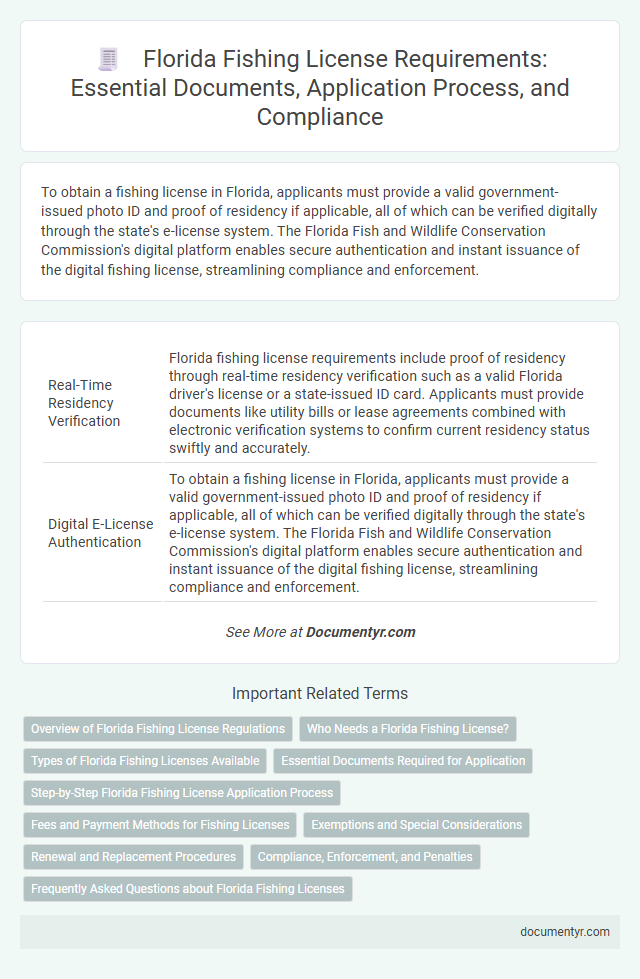
| 1 | Real-Time Residency Verification | Florida fishing license requirements include proof of residency through real-time residency verification such as a valid Florida driver's license or a state-issued ID card. Applicants must provide documents like utility bills or lease agreements combined with electronic verification systems to confirm current residency status swiftly and accurately. |
| 2 | Digital E-License Authentication | To obtain a fishing license in Florida, applicants must provide a valid government-issued photo ID and proof of residency if applicable, all of which can be verified digitally through the state's e-license system. The Florida Fish and Wildlife Conservation Commission's digital platform enables secure authentication and instant issuance of the digital fishing license, streamlining compliance and enforcement. |
| 3 | Florida Fish and Wildlife Conservation Commission (FWC) ID | To obtain a fishing license in Florida, applicants must provide a valid Florida Fish and Wildlife Conservation Commission (FWC) ID, proof of residency if applicable, and a government-issued photo ID such as a driver's license or passport. The FWC ID serves as a unique identifier for tracking licenses and compliance with state fishing regulations. |
| 4 | Social Security Number Compliance | Obtaining a fishing license in Florida requires providing a valid government-issued photo ID and proof of residency, with mandatory disclosure of the applicant's Social Security Number (SSN) to ensure compliance with state regulations. The Florida Fish and Wildlife Conservation Commission uses the SSN to verify identity and prevent fraudulent license issuance. |
| 5 | Vessel Registration Integration | Obtaining a fishing license in Florida requires a valid government-issued ID and proof of residency for in-state discounts, with vessel registration documentation integrated to streamline licensing for boat owners. This integration allows anglers to use their vessel registration details to qualify for specific licenses, ensuring compliance with state regulations while facilitating access to fishing privileges. |
| 6 | Conservation Certificate Upload | To obtain a fishing license in Florida, applicants must upload a valid Conservation Certificate or submit proof of completion from a Florida-approved hunter safety and education course. This requirement ensures compliance with state conservation regulations and promotes responsible fishing practices. |
| 7 | Recreational Marine Zone Endorsement | To obtain a Recreational Marine Zone Endorsement on a Florida fishing license, applicants must provide proof of a valid Florida identification card or driver's license, along with a completed application form. Payment of the endorsement fee and documentation demonstrating residency or an applicable exemption is also required for processing. |
| 8 | Mobile License Wallet Compatibility | To obtain a fishing license in Florida, applicants must provide a valid photo ID such as a driver's license or passport and proof of residency if applicable. The Florida Fish and Wildlife Conservation Commission offers mobile license wallet compatibility through its app, allowing digital storage and easy access to fishing licenses on smartphones, enhancing convenience for anglers. |
| 9 | Non-Resident Exemption Documentation | Non-resident anglers seeking exemption from Florida's fishing license requirements must provide proof of their out-of-state residency, such as a valid driver's license or state ID, along with documentation demonstrating military status or a valid Florida concealed weapon license if applicable. Other acceptable documents include certificates of disability or proof of participation in certain state-sponsored hunting or fishing programs that confer license exemptions. |
| 10 | Disability Accommodations Statement | Applicants with disabilities seeking a Florida fishing license must provide documentation verifying their disability status, such as a physician's certification or a Social Security Disability award letter, to qualify for any applicable accommodations or fee exemptions. The Florida Fish and Wildlife Conservation Commission requires these documents to ensure compliance with disability accommodation policies and to facilitate access to fishing privileges. |
Overview of Florida Fishing License Regulations
To obtain a fishing license in Florida, applicants must present valid identification such as a driver's license or state ID. Proof of residency is required for Florida residents, while non-residents must provide out-of-state identification. Additional documents may include previous license information or exemption certificates depending on age or military status.
Who Needs a Florida Fishing License?
Florida requires a fishing license for anyone aged 16 or older who fishes in its freshwater or saltwater areas. Residents must present proof of Florida residency, such as a Florida ID or driver's license, when applying. Non-residents need valid identification like a driver's license or passport, and specific permits may be necessary for certain saltwater fishing activities.
Types of Florida Fishing Licenses Available
To obtain a fishing license in Florida, you need to provide a valid identification document and proof of residency if applying for a resident license. Acceptable forms of ID include a Florida driver's license, state ID card, or a military identification card.
Florida offers various types of fishing licenses, such as a saltwater fishing license, freshwater fishing license, and a combination license covering both. Special licenses are available for seniors and disabled residents at reduced rates. You can also purchase short-term licenses for temporary fishing activities.
Essential Documents Required for Application
To apply for a fishing license in Florida, you need to provide proof of identification. A valid government-issued ID, such as a driver's license or passport, is essential.
Proof of residency may be required if you are applying for a resident fishing license. Documentation like a Florida driver's license, utility bill, or vehicle registration can serve as proof.
Step-by-Step Florida Fishing License Application Process
What documents are required for a fishing license in Florida? A valid photo ID such as a driver's license or state ID is essential. Proof of residency may be needed for discounted licenses.
What steps should you follow to apply for a Florida fishing license? Begin by gathering your photo identification and proof of residency if applicable. Next, visit the Florida Fish and Wildlife Conservation Commission website or an authorized vendor to complete the application.
How do you complete the Florida fishing license application form? Provide personal details, select the type of fishing license you need, and enter your identification information. Review all entries carefully before submitting your application.
What payment methods are accepted for the Florida fishing license fee? Payment options include credit or debit cards, electronic checks, and in-person cash payments at authorized vendors. Ensure you keep the receipt or digital confirmation for your records.
Fees and Payment Methods for Fishing Licenses
| Document Required | Description |
|---|---|
| Proof of Identity | Valid government-issued ID such as a driver's license or passport. |
| Proof of Residency | Required for resident fishing licenses; accepted documents include a Florida driver's license or state ID. |
| Completed Application | Application form submitted online or in person at authorized retailers or license offices. |
| Payment | Fees for fishing licenses in Florida vary by type and duration. Resident freshwater licenses start around $17. Non-resident licenses may cost $47 or more. Payment methods include credit/debit cards, electronic checks online, cash, and checks at physical locations. You can pay securely through the Florida Fish and Wildlife Conservation Commission's official website or at authorized vendors. |
Exemptions and Special Considerations
To obtain a fishing license in Florida, applicants must provide a valid photo ID and proof of residency if applying for a resident license. Non-residents need to supply a valid government-issued ID such as a passport or driver's license.
Certain exemptions apply, including residents under 16 years old and Florida residents who are 65 or older. Active-duty military personnel and veterans with proper identification may also qualify for free or discounted licenses.
Renewal and Replacement Procedures
Renewing or replacing a fishing license in Florida requires specific documents to ensure the process is smooth and efficient. Knowing which materials to prepare will help you complete your request without delay.
- Current or Previous Fishing License - Present your existing or expired license to verify prior registration.
- Valid Photo Identification - A government-issued ID such as a driver's license or passport confirms your identity.
- Proof of Residency - Documents like a utility bill or voter registration card demonstrate Florida residency eligibility.
Submitting these documents through the Florida Fish and Wildlife Conservation Commission's official channels facilitates prompt renewal or replacement of your fishing license.
Compliance, Enforcement, and Penalties
Obtaining a fishing license in Florida requires specific documentation to ensure compliance with state regulations. Failure to present these documents during enforcement checks can lead to significant penalties.
- Proof of Residency - Florida residents must provide valid identification or proof of residency to qualify for resident fishing licenses.
- Identification Documents - A government-issued ID such as a driver's license or passport is required to verify identity for all applicants.
- License Purchase Receipt - Carrying valid proof of purchase or the physical fishing license is mandatory to avoid fines during enforcement by wildlife officers.
What Documents Are Required for a Fishing License in Florida? Infographic